
Roof Rats Have Reached Greensboro
For years, roof rats were something people in eastern North Carolina and on farms dealt with. Greensboro homeowners now hear them overhead. Roof rats in Greensboro are no longer a rarity, and they behave so differently from the Norway rats most people know that it is worth learning to tell them apart.
From Eastern Farms to Triad Attics
The roof rat, also called the black rat or ship rat, has long been at home in the warmer, wetter coastal plain and around barns and feed storage. It is a climber, more at ease on a branch than in a burrow. Local rodent providers across the Triad now report finding roof rats in attics, particularly in neighborhoods with big trees whose limbs reach the roof.
Milder winters help. Roof rats handle cold less well than Norway rats, so fewer freezing nights give them a better chance of surviving inland. Mature tree canopy gives them the highway.
Check Your Own House
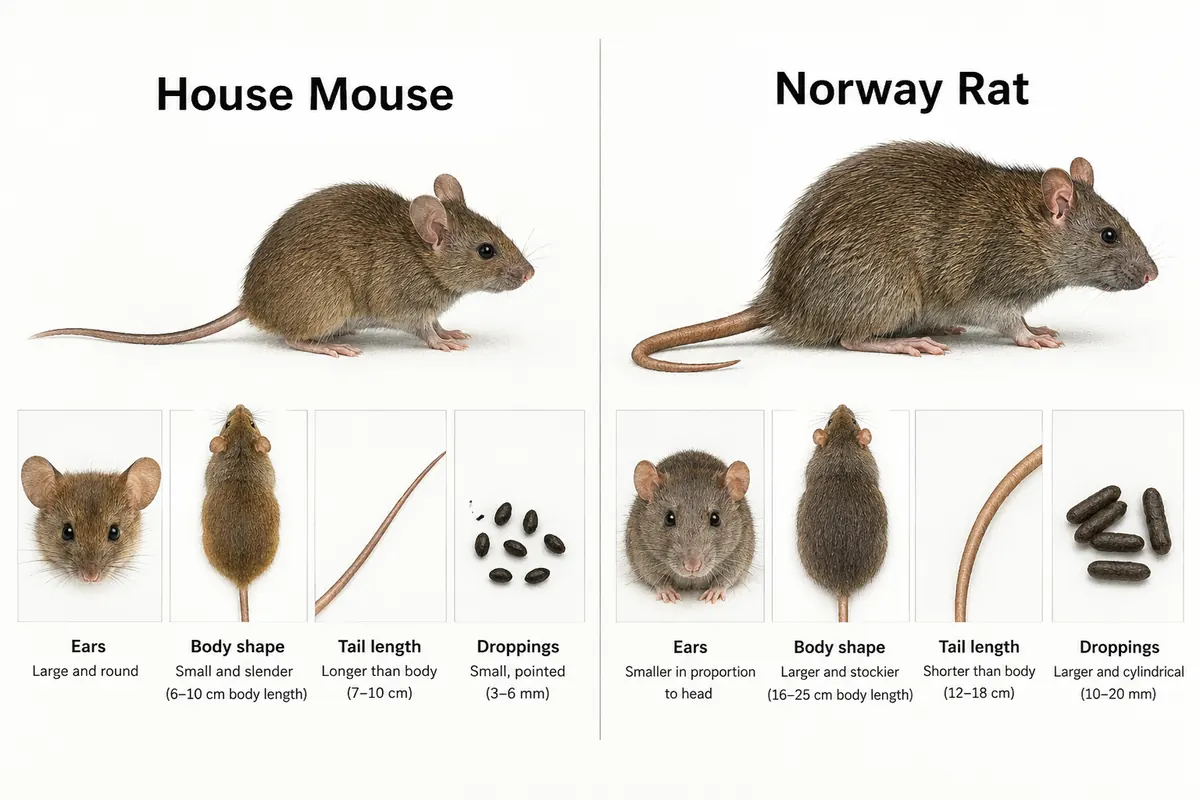
You rarely get a good look at a rat, but the clues it leaves are easy to read. Use this as a field check:
| Clue | Roof rat | Norway rat |
|---|---|---|
| Where you hear or see them | Attic, upper walls, trees, utility lines, roof edges | Crawl space, basement, ground floor, under sheds and decks |
| Droppings | About 1/2 inch, pointed at the ends | About 3/4 inch, blunt and capsule-shaped |
| Ears and tail | Large ears; tail longer than the body | Small ears; tail shorter than the body |
| Burrows | Rarely; they nest up high | Common along foundations, under slabs and in mulch beds |
| Body | Slim, sleek, pointed nose | Heavy, thick, blunt nose |
Two more hints: roof rats often chew fruit still hanging in trees, and their activity in the attic tends to run along the eaves and the top plates of walls rather than through the middle of the insulation.
Why the Difference Changes the Fix
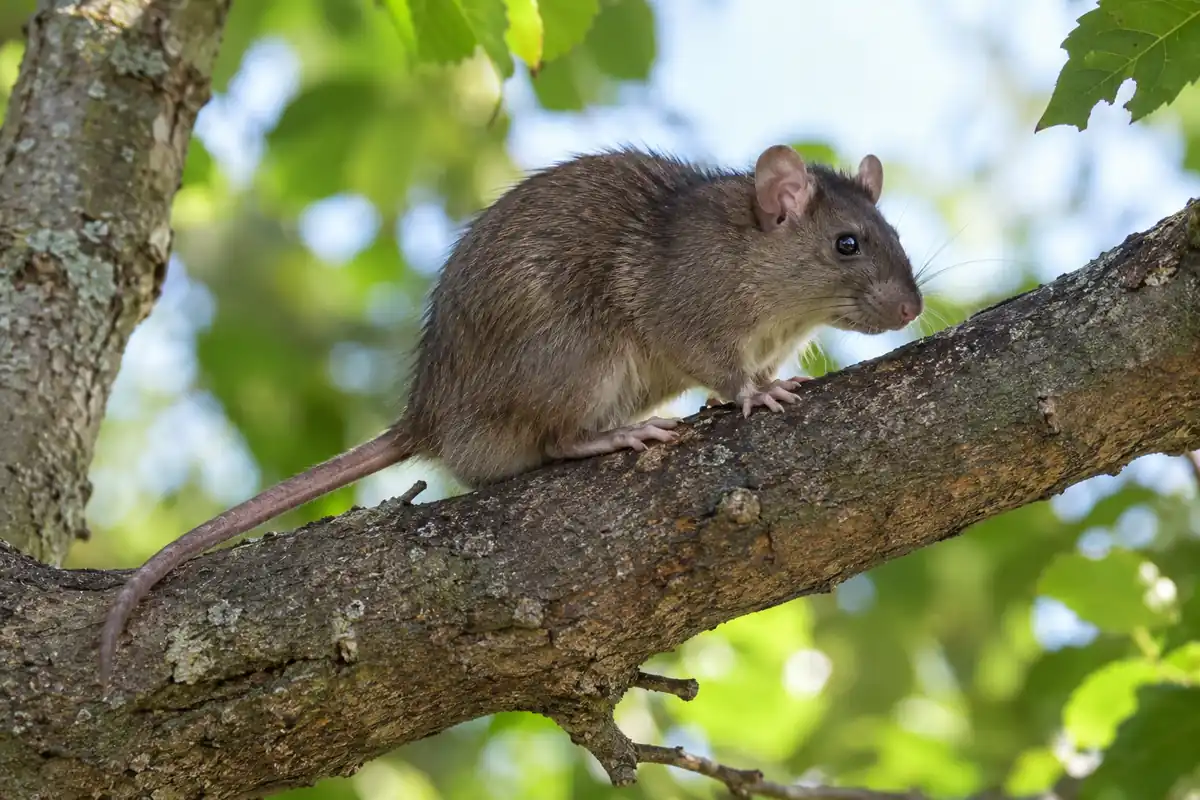
Getting the species right tells you where the problem starts.
- Roof rats mean the roofline: soffits, gable vents, roof returns, chimney flashing, and branches or wires that touch the house. Trimming trees back several feet and sealing high openings matters most, and traps go in the attic and along upper runways.
- Norway rats mean the foundation: crawl space vents, gaps at the sill plate, burrows along the wall and openings around pipes. Sealing low and trapping in the crawl space matters most.
Treating a roof rat problem only from the ground, or a Norway rat problem only in the attic, is a common reason a rat job drags on. The page on telling Norway rats from roof rats during removal covers how providers handle each, and rodents in the attic goes deeper on the roofline.
What Roof Rats Do Once They’re Inside
A roof rat that finds its way through a soffit gap usually settles close to where it came in. Nests tend to sit in the insulation near the eaves, in boxes stored in the attic or in the gap above a porch ceiling. From there the rats travel along the top plates of walls, down through wall cavities and into kitchens, often by the same route each night.
The damage adds up quietly:
- Wiring. Rats gnaw constantly to keep their teeth worn down, and attic cables are easy to reach.
- Insulation. Tunnels, flattened runs and urine-soaked patches reduce how well it works.
- Ductwork. Flexible ducts in the attic are chewed or crushed.
- Stored items. Holiday decorations, old clothes and papers become nesting material.
What Draws Roof Rats to a Yard
Roof rats eat more fruit, nuts and seeds than Norway rats do. In Greensboro yards, that means fallen pecans, figs, berries and the seed that spills under bird feeders. Thick ivy on a wall or fence gives them a protected path, and a tree whose limbs rest on the roof finishes the route.
A few changes make a house far less inviting:
- Trim branches so none come within several feet of the roof.
- Pick up fallen fruit and nuts regularly in late summer and fall.
- Move bird feeders away from the house, or take them down for a season.
- Pull ivy and vines back from walls, fences and utility poles near the house.
- Keep pet food indoors, especially overnight.
A Simple Way to Confirm Activity
If you are not sure anything is up there, listen at night from a room directly below the attic, starting at dusk. Steady movement along the edges of the ceiling, rather than across the middle, is a good sign of rats using the top plates. Then check the attic floor near the hatch and along the eaves in daylight for fresh, pointed droppings. Wear gloves and don’t sweep anything you find.
Rats You Don’t Need to Worry About
North Carolina also has native rats, such as the hispid cotton rat and the eastern woodrat. They live in fields, woods and wetlands and rarely come into houses. If you see a rat in tall grass at the edge of a field, it may well be one of these, and it isn’t the same problem as a rat in your attic.
Getting the Right Help
If you are hearing footsteps overhead at night, finding pointed droppings in the attic or watching a rat run along a power line, start with the roofline. A provider should be able to tell you which rat you have from the droppings and runways before setting a single trap. For the broader picture of rats in Greensboro homes, see the rodent control overview.
Roof Rats in Greensboro: Quick Answers
Are roof rats more dangerous than Norway rats?
Not more dangerous, but harder to reach. They nest high, chew wiring in attics and are more cautious around traps.
Do roof rats live in trees?
They can nest in dense trees, vines and shrubs, which is why trimming limbs away from the house matters so much.
Can a house have both kinds?
Yes. It is not unusual to find Norway rats under a house and roof rats in the attic of the same home.
Sources: NC State Extension on house mice and other rodents; CDC: how to clean up after rodents.