
Dead Rodent Removal in Greensboro, NC
Greensboro averages about 43 days a year above 90°F. A rat that dies inside a wall in July doesn’t stay a secret for long. If a sour, rotten smell has settled into one room and won’t air out, dead rodent removal Greensboro homeowners call about is usually a matter of finding one small animal in one hidden spot and getting it out cleanly.
That Smell in the Wall
The smell has a pattern. It starts faint, often near a baseboard, a closet or a ceiling corner, then builds over several days until it fills the room. Heat makes it stronger, so it is worse in summer and worse in the afternoon. Air fresheners cover it for an hour at most.
The most common cause is poison bait. A rodent that eats bait doesn’t drop on the spot; it goes back to shelter, which in a house means inside a wall, under a floor, above a ceiling or in the crawl space. That is the main reason providers prefer trapping indoors and keep any bait outside.
Other causes include a rodent trapped after holes were sealed with animals still inside, and older nests in an attic where an animal simply died.
Finding It Without Opening the Whole Wall
Nobody wants a wall torn apart over a mouse. A careful search narrows it down first:
- Follow your nose at different heights. Smell along baseboards, at outlets and at ceiling level. The strongest point is usually within a few feet of the carcass.
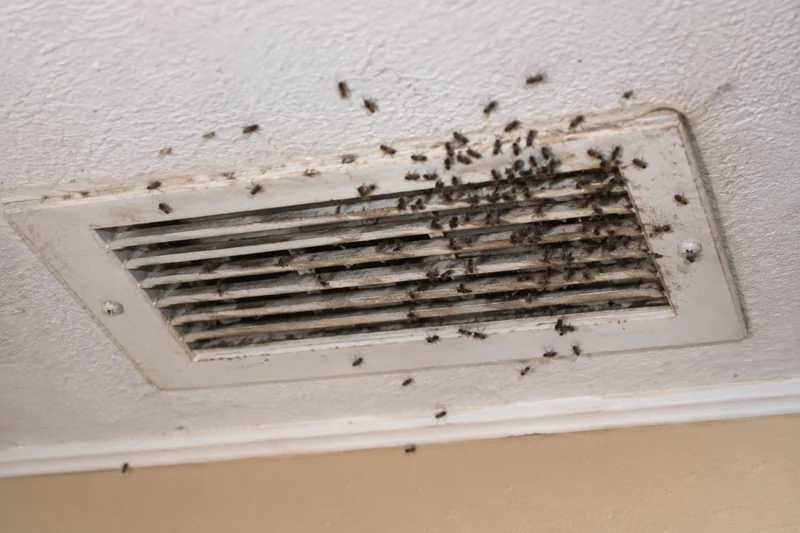
- Watch for flies. A cluster of flies around a vent, light fixture or window in one room is a strong clue.
- Look for stains. A damp or discolored patch on drywall or a ceiling can mark the spot.
- Check the obvious hiding places first: behind and under appliances, inside lower cabinets, the crawl space below the room and the attic above it.
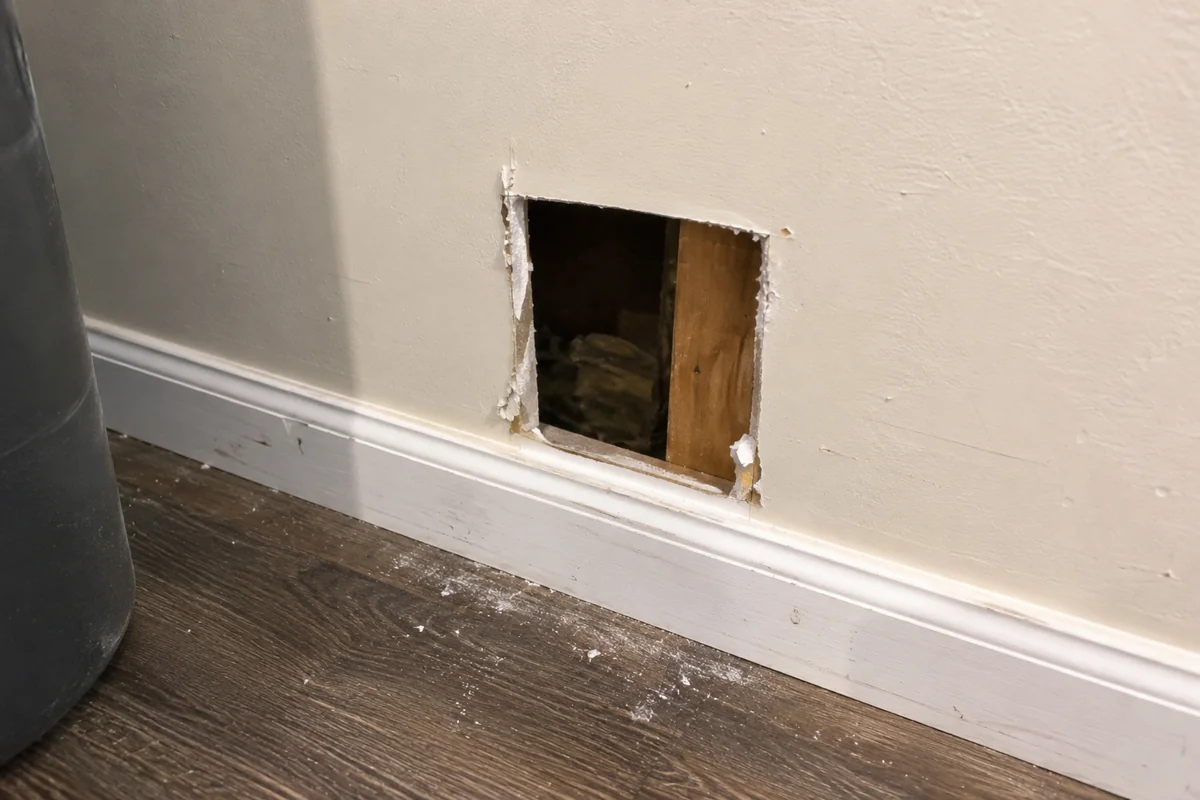
When the carcass is inside a finished wall, a provider cuts one small, square access hole in the most likely spot, removes the animal and leaves a neat opening for a simple drywall patch.
Removal and Cleanup, the CDC Way
Dead rodents can carry germs, and the fleas and mites that lived on them look for a new host as the body cools. The CDC’s rodent cleanup guidance covers the safe way to handle one:
- Put on rubber, latex or nitrile gloves, and use insect repellent on your clothing if fleas are a concern.
- Spray the dead rodent and the area around it with disinfectant or a bleach solution until soaked, and let it sit for five minutes.
- Pick it up with a paper towel or a plastic bag turned inside out over your hand.
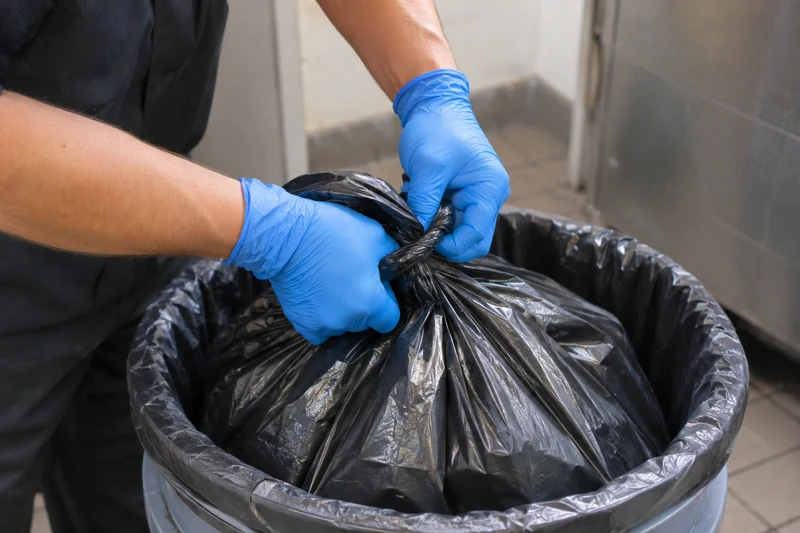
- Seal it in a plastic bag, then put that bag inside a second bag and seal it too.
- Put it in a trash can with a lid, then disinfect the area and your gloves, and wash your hands.
Never handle a dead rodent bare-handed, and don’t vacuum around it before disinfecting.
Getting Rid of the Odor
The smell only ends when the source is gone. After removal, the area gets cleaned with disinfectant, and an enzyme cleaner breaks down fluids that soaked into wood or drywall. Odor neutralizers and ventilation help with what is left. If the carcass can’t be reached at all, the smell will fade on its own as it dries out, but that can take weeks in warm weather.
Why It Happened, and Stopping the Next One
A dead rodent in the wall means a live rodent got into the wall, and usually more than one. That opening is still there. Before the patch goes up, it is worth finding the gap that let it in and closing it. The page on how to keep the next one out covers sealing, and if you have been hearing activity for a while, start with rats in the walls.
Dead Rodent Removal Greensboro Questions
How long will a dead rat smell in the wall?
It depends on the size of the animal, the heat and the airflow. In Greensboro summers it can last a few weeks. A mouse fades sooner than a rat, but both are hard to live with in the meantime.
Are dead rats a health hazard?
They can be. Rodents are linked to diseases such as salmonellosis and leptospirosis, and their fleas and mites can bite people and pets. Use gloves and disinfectant, and never touch one with bare hands.
Is it harmful to breathe dead mouse smell?
The smell is mostly unpleasant rather than dangerous; the real risk comes from touching the carcass, droppings or contaminated surfaces. Air the room out while the source is being found.
Do rodent providers remove dead animals?
Many do, as part of a rodent job. Ask when you call, and ask whether they also find and seal the entry point.
Do dead rats keep other rats away?
No. The openings that let the first rat in are still open, and other rats will keep using them.
Sources: CDC: how to clean up after rodents; Climate-Zone: Greensboro climate averages.