
Attic Rodent Removal in Greensboro, NC
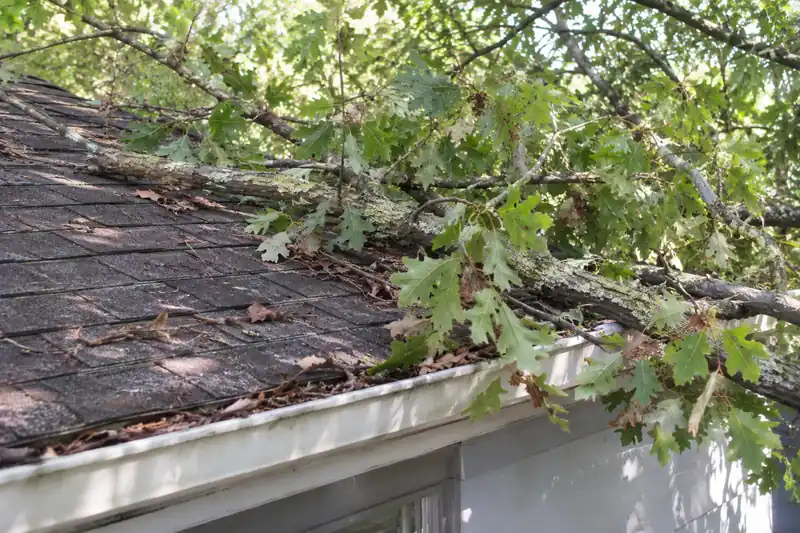
If the running overhead starts just after dark and fades around sunrise, you are probably listening to rats on their nightly commute. In Irving Park, Fisher Park and Sunset Hills, the oak and maple limbs lying across the roof are often how they got up there. Attic rodent removal Greensboro homes need starts with that sound, the time it happens and the route the animals use.
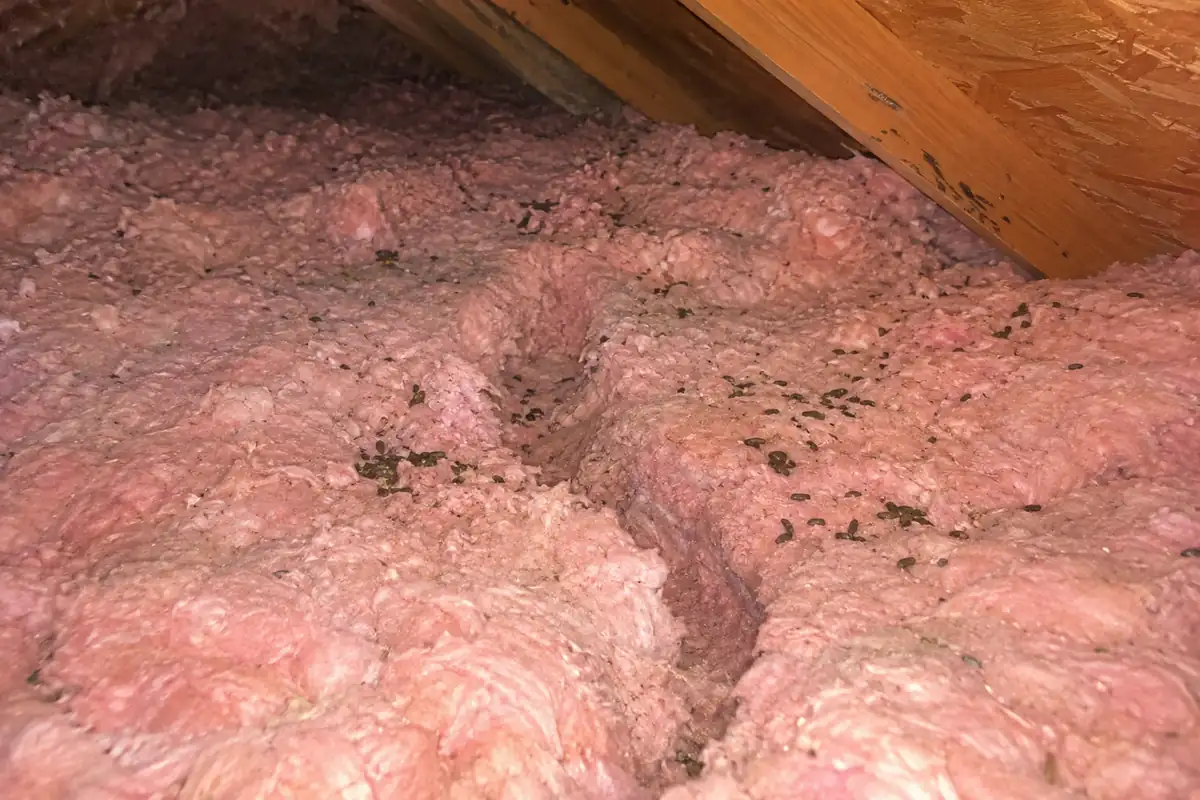
What’s in the Attic? Listen to the Clock
The time of day narrows the list fast. NC State Extension describes rats as leaving the nest around dusk and returning near sunrise, while mice are busiest at dusk and again before dawn.
| When you hear it | What it sounds like | Most likely animal |
|---|---|---|
| From dusk through the night | Heavy scurrying, thumps, gnawing on wood | Rats, usually roof rats |
| At dusk and again before dawn | Light, quick scratching, often near the eaves | Mice |
| During the day | Running and rolling sounds, often in the morning | Gray squirrels, which this site doesn’t cover |
Write down when the noise starts and stops for two or three nights. That simple log tells a provider more than a description of how loud it was.
How Rodents Climb Into Greensboro Attics
Greensboro’s older neighborhoods have some of the oldest, fullest tree canopy in the Triad, and roof rats treat it as a highway. Rats climb trunks, walk out on limbs and drop onto shingles, then look for any opening along the roof edge.
The usual ways in:
- Overhanging branches within a few feet of the roof.
- Utility lines running from the pole to the eaves.
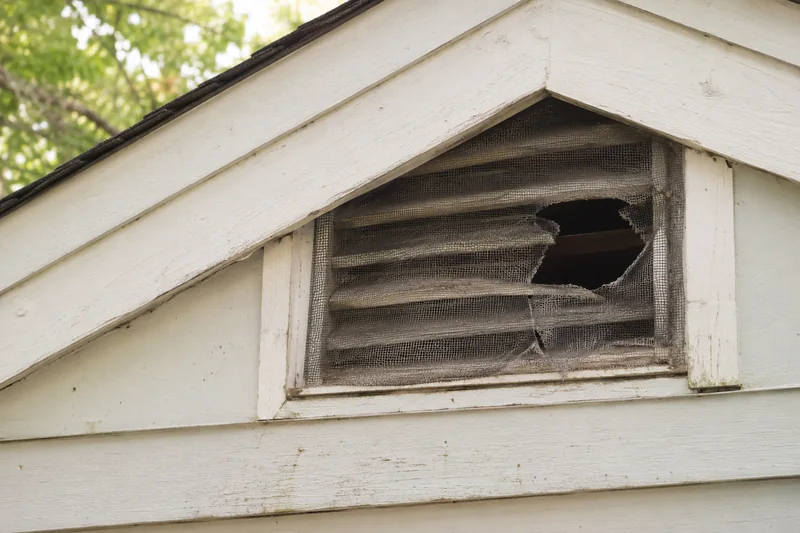
- Gable vents with thin or torn screens.
- Soffit gaps where the soffit panel has sagged away from the fascia.
- Roof returns, the small boxed corners where two rooflines meet, which often have an open seam.
- Plumbing vent pipes and chimney chases with gaps around the flashing.
Mice usually arrive from below instead, climbing through wall cavities from the crawl space or garage. If you suspect roof rats, the post on roof rats reaching Greensboro shows how to tell them from Norway rats.
Getting Them Out, Then Sealing Up
The order matters more than anything else in an attic. First the provider confirms what is up there, by droppings, tracks in insulation and chewed materials. Then traps go along the paths the animals use, often on rafters and beside the insulation trails. Only after activity stops do the openings get sealed, because sealing animals inside sends them chewing through drywall or dying where you can’t reach them. If a smell follows a round of baiting, see a smell after baiting. For the sealing itself, see sealing the roofline.
Trimming branches back several feet from the roof is part of the job. It is one of the few fixes that keeps roof rats off the house without anything to maintain.
Cleaning Up After Attic Rodents
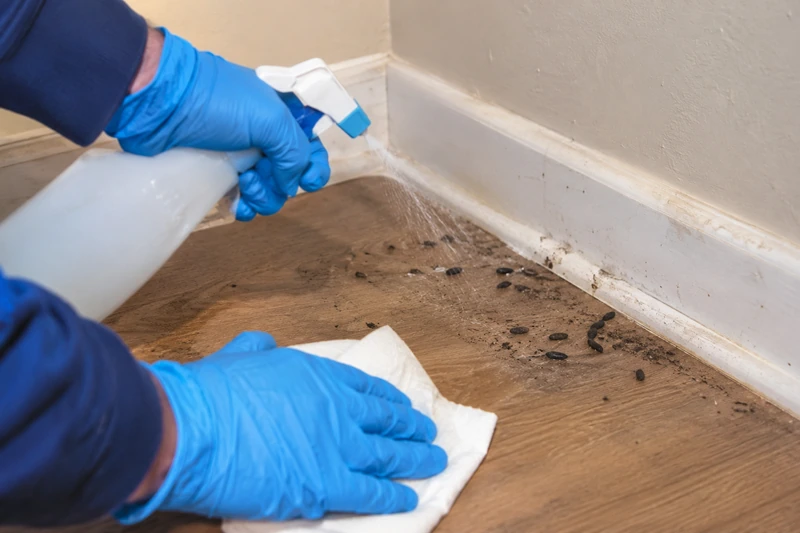
Attic droppings and urine dry into dust that you do not want to breathe. The CDC’s cleanup guidance is specific:
- Open the attic and let it air out for at least 30 minutes before starting.
- Wear rubber, latex or nitrile gloves.
- Spray droppings, urine and nesting material with a disinfectant or a fresh bleach solution of about one and a half cups of bleach per gallon of water, until soaked.
- Let it soak for five minutes.
- Wipe it up with paper towels and throw them away in a sealed bag.
- Never sweep or vacuum droppings, which puts particles in the air.
Insulation that is heavily soiled, tunneled or packed with nests usually needs to come out and be replaced. That is a bigger job with masks and protective gear, and many homeowners hand it to a provider.
Rats in the Ceiling Above Living Spaces
Sometimes the sound is not up in the attic at all, but right above a bedroom or living room ceiling, in the space between the drywall and the floor above or along a soffit. Rats use these narrow spaces between the attic and the walls. Water-like stains, a dark spot around a light fixture or droppings falling from a ceiling vent all point to activity just above the drywall.
Attic Rodent Removal Greensboro Questions
What do rodents in the attic sound like?
Rats make heavier scurrying and thumping sounds, plus gnawing that can sound like someone sanding wood. Mice are lighter and quicker, more of a skittering. Both are loudest at night.
Will rodents leave the attic on their own?
Rarely. An attic gives them warmth, shelter and a safe place to nest. Even if a few leave, the openings they used stay open for the next ones.
What should I do if I hear rodents in the attic?
Note the times, look for droppings near the attic hatch, and don’t seal any holes yet. Then call, because the noise usually means an opening along the roofline that needs to be found.
How long will mice stay in the attic?
As long as food and shelter hold out. Mice multiply quickly, so the population tends to grow rather than leave.
Is it safe to go into the attic and clean it myself?
For a small amount of droppings, following the CDC steps above, yes. For widespread nesting, soiled insulation or a dead animal, let a provider handle it.
Sources: NC State Extension on house mice and other rodents; CDC: how to clean up after rodents.