
Rat Removal in Greensboro, NC
Set a trap for a Greensboro rat and it may walk around it for five days or longer. Rats treat anything new in their path as a threat, which is why so many hardware-store traps sit untouched in garages across town while the scratching in the walls carries on. Rat removal Greensboro homeowners can count on works with that caution instead of fighting it.
Why Greensboro Rats Outsmart Store-Bought Traps
Rats are neophobic, a technical way of saying they distrust anything unfamiliar. According to NC State Extension, a rat may avoid a new trap for five days or more, while a mouse will often investigate one the first night. So a trap set on Saturday and checked on Monday tells you almost nothing, and moving it around every day resets the clock.
Range matters too. A rat will travel about 100 feet from its nest to feed. In a Greensboro neighborhood that distance can easily cross two backyards, so the rat chewing through your pantry door may be living under a neighbor’s shed, inside a woodpile or in a burrow along a fence line. Trapping only in the kitchen never touches the nest.
Then there is poison. Bait from the hardware store does kill rats, but it does nothing to control where they die. A poisoned rat usually heads back to shelter, which often means the inside of a wall or the crawl space, and a few days later you have a smell problem on top of a rat problem. The page on rats that die in the walls explains what happens next.
Ground Floor or Roofline? Working Out Which Rat You Have
Two rats get into North Carolina houses, and they live very differently. The Norway rat is the one most homeowners here meet: a heavy, burrowing rat that stays low. The roof rat is a slimmer climber that prefers attics and trees. Knowing which one you have tells a provider where to look first.
| Trait | Norway rat (Rattus norvegicus) | Roof rat (Rattus rattus) |
|---|---|---|
| Where it lives | Burrows at foundations, under slabs and sheds, in crawl spaces | Attics, upper walls, trees, along utility lines |
| Build | Heavy and thick-bodied, blunt nose, small ears | Slim and agile, pointed nose, large ears |
| Tail | Shorter than the head and body | Longer than the head and body |
| Droppings | Capsule-shaped with blunt ends, about 3/4 inch | Pointed ends, about 1/2 inch |
| Typical first sign | Burrow holes, gnawed lower door edges, greasy marks along walls | Running overhead at night, droppings in the attic |
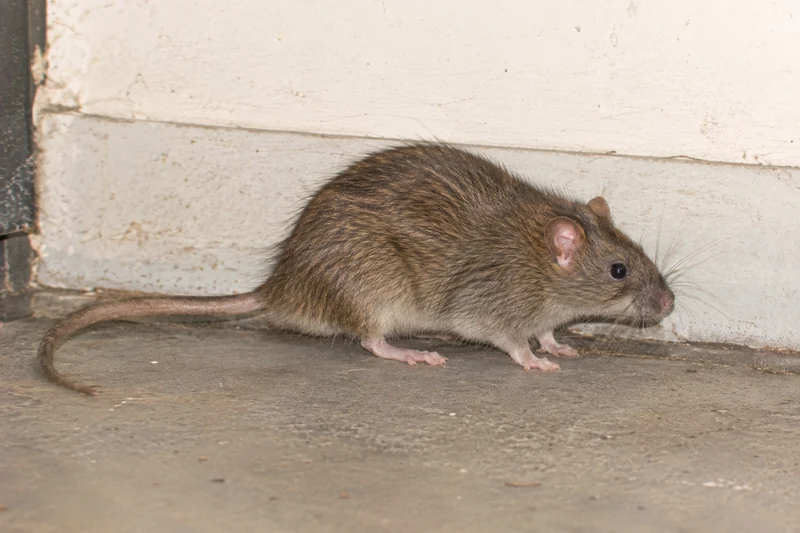
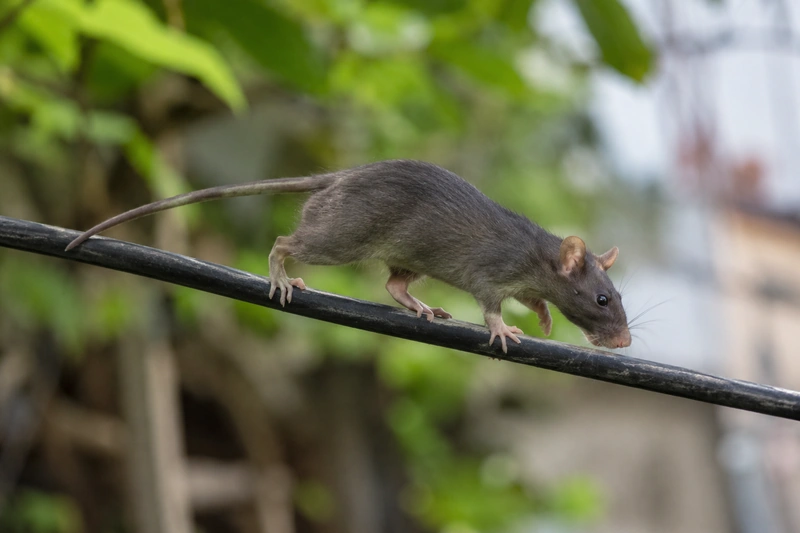
For a closer field check you can do at your own house, see the post on telling Norway rats from roof rats.
How a Local Provider Removes Rats
Removing rats properly is slower than people expect, because the animals have to accept the traps before the traps can work. A typical job runs like this:
- Inspection. The provider follows the signs: droppings, gnaw marks, dark rub marks where fur brushes walls, and runways worn into insulation or soil. The goal is to find both the route into the house and the nest area outside.
- Getting the rats used to the traps. Traps often go out unset, or baited without being armed, for several days. Once rats are feeding from them without fear, they are set. It feels slow; it is the step that makes the rest work.
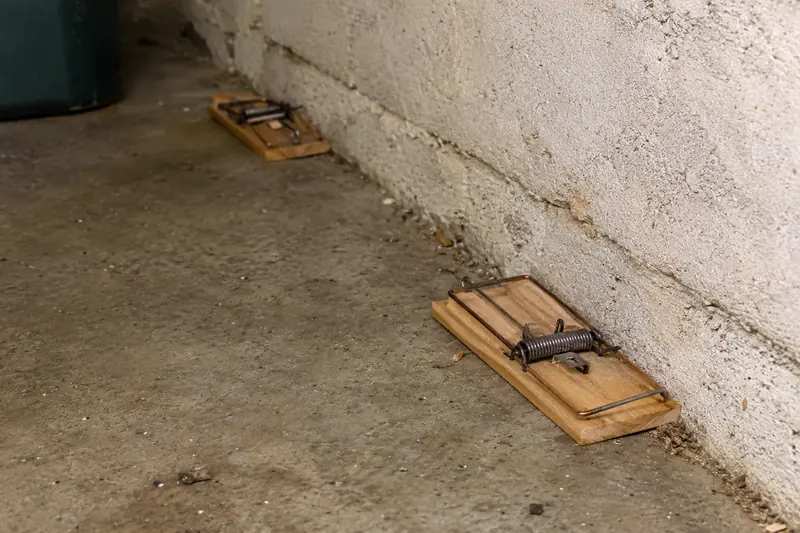
- Placement along runways. Rats travel along edges, so traps sit flush against walls, beams and sill plates, set where the animals already walk rather than in the middle of a room.
- Outdoor stations, if used. Any bait stays outside in locked, tamper-resistant stations, anchored in place so children and pets can’t reach it.
- Sealing. Once activity drops, the openings get closed with materials rats can’t chew. The page on how to close the gaps rats use covers materials and methods.
- Follow-up. Checks continue until traps stay empty and no fresh droppings or gnawing appear.
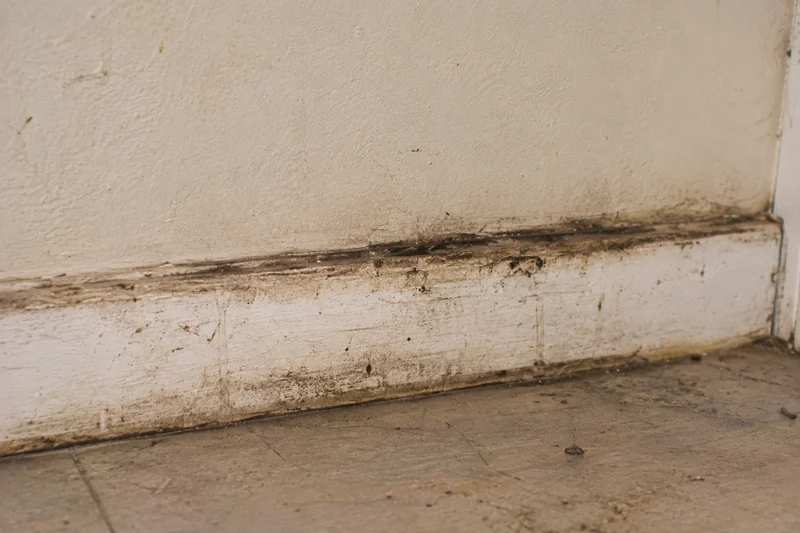
Cleanup is the last piece. Old droppings, nesting material and soiled insulation keep the scent trail alive for the next rat that wanders by, so removing them is part of keeping the house clear.
Rats Under the House, in the Walls and in the Yard
Under the house
Norway rats love a crawl space: dark, close to the ground, often warm from the ductwork. Torn vapor barrier and insulation pulled off the joists are the usual evidence. The page on Norway rats under the house goes through what a crawl space job involves.
Inside the walls
A rat in the wall sounds bigger than it is: scratching, a thump, sometimes gnawing at night that stops when you knock. Rats use the gaps around plumbing and wiring as hallways between the crawl space and the attic, so sound in a wall usually means an opening at one end or the other.
In the attic
Running overhead from dusk to sunrise points to rats that climbed in at the roofline, often by way of a tree limb. Start with roof rats in the attic.
In the yard
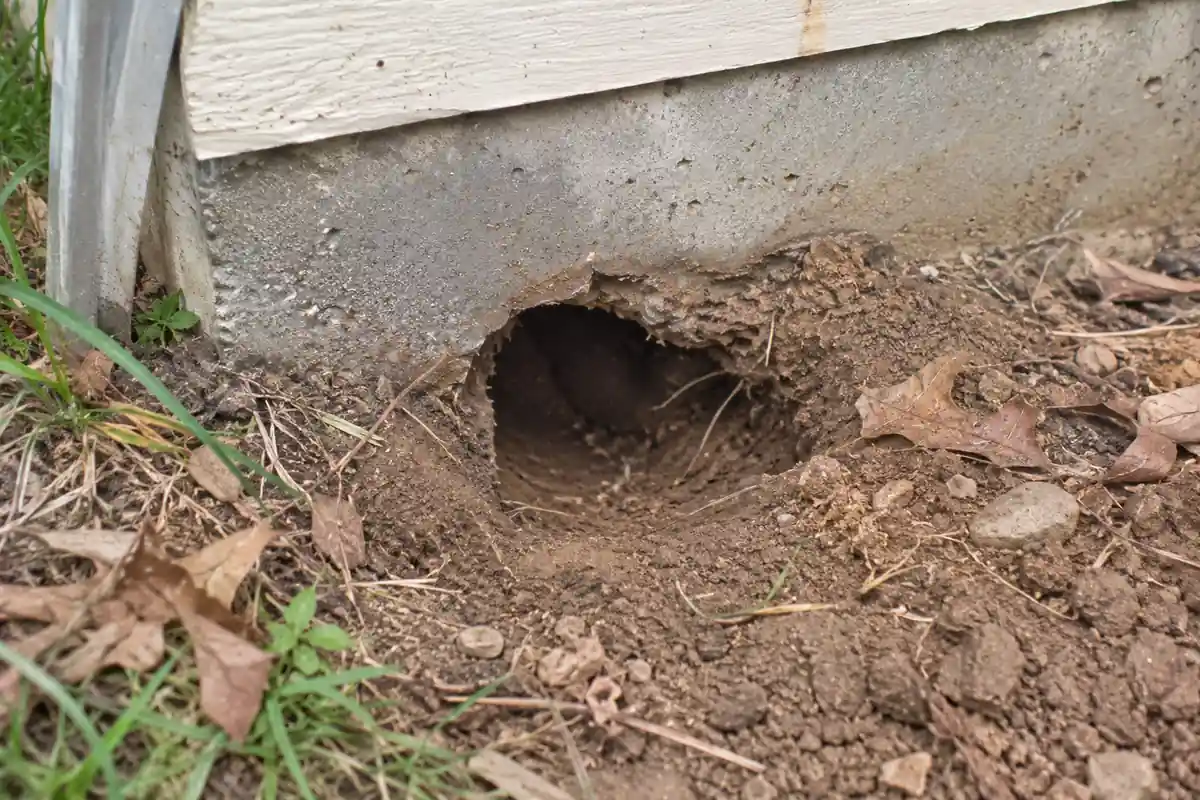
Holes about two to four inches across in mulch beds, along foundations or beneath decks and sheds are classic Norway rat burrows. Bird feeders, compost bins and pet food left on a porch keep them nearby. Homes near Greensboro’s creeks see more of this; the post on rats in creek-side yards explains why.
What to Ask When You Call About Rats
A few rat-specific questions show quickly whether a provider will solve the problem or just set traps:
- Will you look for the burrow or nest outside, not just in the room where I heard them?
- How long will traps stay out before you expect results, given how wary rats are?
- Which openings will you seal, and will that happen before or after the rats are gone?
- What should I change around the yard, such as bird feeders, firewood or ivy on the walls?
Rat Removal Greensboro Questions
How long do rat traps take to work?
Often longer than people expect. Because rats avoid new objects, the first catch can take several days to a week, and a provider may leave traps unset at first so the rats lose their suspicion. Mice usually go faster.
Why are rats so hard to get rid of?
Three reasons: they distrust traps, they roam about 100 feet so the nest may be outside your property line, and an unsealed opening lets new rats replace the ones you remove.
How many rats are there if I’ve seen one?
There is no reliable formula, and anyone who quotes one is guessing. Rats live in groups, though, so one sighting rarely means one rat. Fresh droppings in more than one spot, new burrows and multiple runways tell you more than a single sighting does.
How do I get rid of rats permanently?
Remove the rats that are there, then close every opening they used and take away easy food and cover around the yard. Skip any of those three steps and rats come back.
Are there roof rats in Greensboro?
Yes. Roof rats were long treated as an eastern North Carolina and farm problem, but they now turn up in Triad attics, especially where trees touch rooflines.
Can I wait for the rats to leave on their own?
Not if they have food and shelter. Rats that have settled in a crawl space or wall don’t move on in spring; they breed there.
Sources: NC State Extension on house mice and other rodents; CDC: how to clean up after rodents.