
Crawl Space Rodent Control in Greensboro, NC
Read enough Greensboro home listings and two phrases keep coming up: “walk-in crawl space” and “vapor barrier.” Beneath a lot of floors here sits a dark, quiet space with ductwork running through it, and Norway rats and house mice like it as much as buyers do. Crawl space rodent control Greensboro homes need means getting into that space, finding what the animals have done to it, and closing it up so they can’t return.
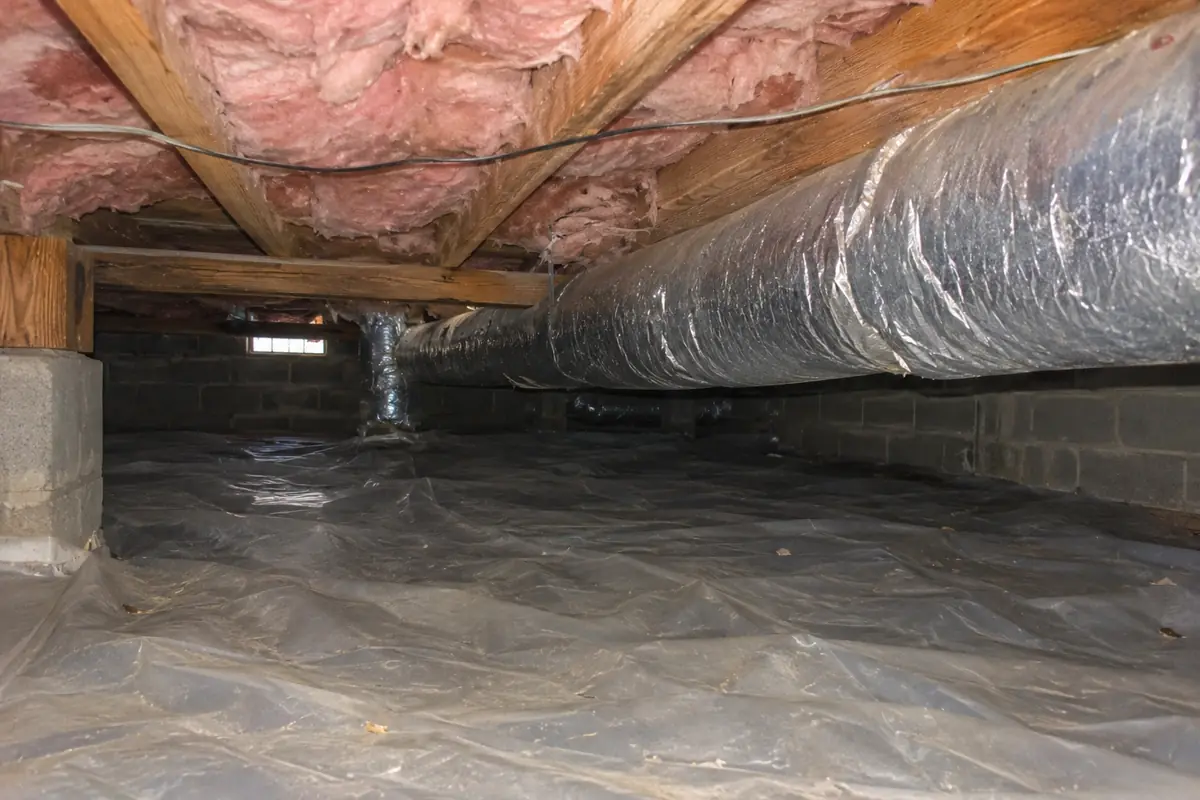
The Space Under Greensboro Floors
Much of Greensboro’s housing sits on crawl space foundations rather than slabs or full basements: brick piers or block walls, a dirt floor covered with plastic, and the house’s ductwork, plumbing and wiring strung through the joists. It is a practical design for the Piedmont’s clay soils, and it gives rodents everything they want.
- Shelter. It is dark and rarely visited.
- Warmth. Ducts and water heaters radiate heat all winter.
- Nesting material. Fiberglass batts between the joists make ready-made bedding.
- Easy access. Vents, access doors and gaps around pipes connect it straight to the yard.
- A route upward. Plumbing and wiring holes in the subfloor lead into walls and kitchen cabinets.
Norway rats, which burrow and stay low, are the usual crawl-space rat. Mice move in too, especially when a crawl space connects to a garage.
What Rodent Damage Looks Like Down There
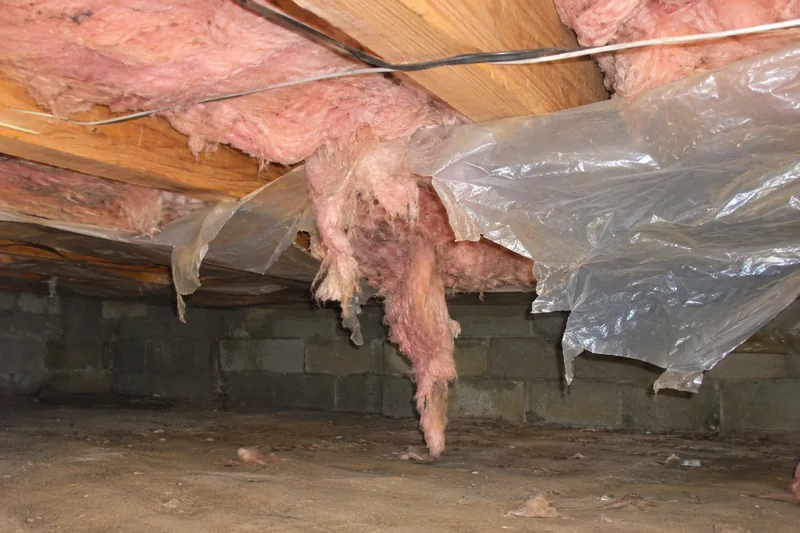
Most people learn about crawl space rodents from someone else: an HVAC technician, a home inspector or a plumber who came back up with bad news. The damage they describe tends to fall into the same few categories.
| What you’ll see | What it means |
|---|---|
| Torn or shredded vapor barrier | Rats tunneling under or chewing through the plastic for nesting material |
| Insulation hanging from the joists or pulled down in clumps | Nesting, and urine-soaked batts that have lost their hold |
| Chewed or crushed flexible ductwork | Rats chewing in for warmth; conditioned air now leaks into the crawl space |
| Burrows in the dirt along the foundation wall | An established Norway rat colony |
| Musty, sour smell coming up through floor registers | Urine and droppings, carried into the house by the HVAC system |
| Gnawed wiring | A fire risk worth having an electrician check |
A damaged duct is the problem homeowners underestimate most. Once a supply or return duct has a hole in it, the system can draw crawl-space air, odor and dust into the rooms above.
Clearing Rodents Out of a Crawl Space
A crawl space job is physical work in a tight space, which is part of why it gets put off. The usual steps:
- Inspection with a strong light and sometimes a camera on a pole, looking for burrows, runways, droppings and the exact openings in the foundation.
- Trapping along the foundation walls, beside piers and next to duct runs, checked on a schedule.
- Nest and debris removal once activity slows, including soiled insulation and torn barrier.
- Sealing, covered in the next section.
- A final check that traps stay empty and no new burrows appear.
How to Rat-Proof a Crawl Space
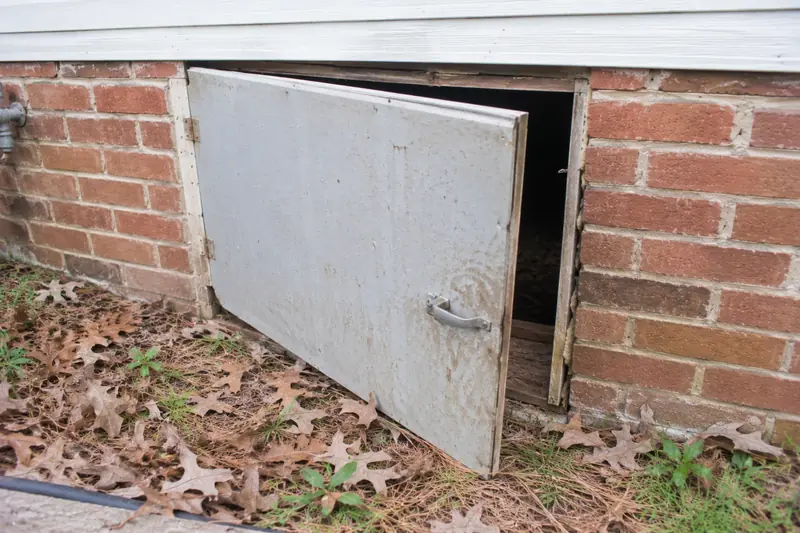
Crawl space exclusion is its own specialty because the openings are so specific. The checklist:
- Foundation vents. Each needs intact, galvanized 1/4 inch hardware cloth fastened to the masonry, not just a decorative grille.
- The access door. It should close flat against its frame with no gaps at the corners. A warped plywood panel leaned against the opening doesn’t count.
- Foundation cracks in brick or block, filled with mortar or masonry patch.
- Pipe and line entries, sealed around the pipe with mesh and sealant.
- The sill plate, where wood framing sits on the foundation, checked for chewed gaps.
- Burrows along the outside wall, collapsed and backfilled, sometimes with a buried mesh apron to stop new digging.
Sealing the rest of the house is covered on the page about sealing the foundation and other weak spots.
Does Encapsulation Stop Rodents?
Not on its own. Encapsulation, which seals the crawl space with heavy plastic liners and often a dehumidifier, is a moisture project done by a different trade. The liner can make a crawl space less appealing, but rats chew through plastic, and an encapsulated crawl space with an open vent or a gap at the door still lets them in. If you are planning encapsulation, have the rodents removed and the openings sealed first, so you don’t seal them inside new plastic.
Putting It Back Together
After the animals are gone and the openings closed, the space needs repair: a new or patched vapor barrier, replaced insulation, and fixed or replaced ducts. Droppings and nests should be handled the way the CDC recommends: wetted with disinfectant first, never swept dry. The full steps are on the attic page under the CDC cleanup steps.
Crawl Space Rodent Control Greensboro Questions
Is it common to have mice in your crawl space?
Very. Crawl space homes are common in Greensboro, and the space is often the first place mice and Norway rats settle before moving up into the walls.
What can I put in a crawl space to keep mice out?
Physical barriers: hardware cloth over every vent, a tight-fitting access door, and sealed gaps around pipes. Repellent sachets and plug-ins don’t stop mice from walking in.
How do I get rid of rodents under my house?
Trap them, remove their nests, then seal the vents, door and foundation gaps. Doing only one of those three is why so many crawl space problems return.
Can rodents in the crawl space make the house smell?
Yes. Urine and droppings near ductwork, or a damaged duct, can carry odor into the house through floor registers.
Sources: CDC: how to clean up after rodents; NC State Extension on house mice and other rodents.