
Rodent Exclusion in Greensboro, NC
Four in ten Greensboro homes were built before 1980, and about one in five went up before 1960. Forty-plus years of settling opens gaps at sill plates, foundation vents and pipe runs, and a mouse needs very little room to use one. Rodent exclusion Greensboro houses need is a careful, roof-to-foundation job of finding those openings and closing them with materials rodents can’t chew.
Why Older Greensboro Homes Let Rodents In
Housing data from the American Community Survey shows how much of the city’s housing is mid-century or older. Those houses were built well, but not with rodents in mind. Common weak spots include:
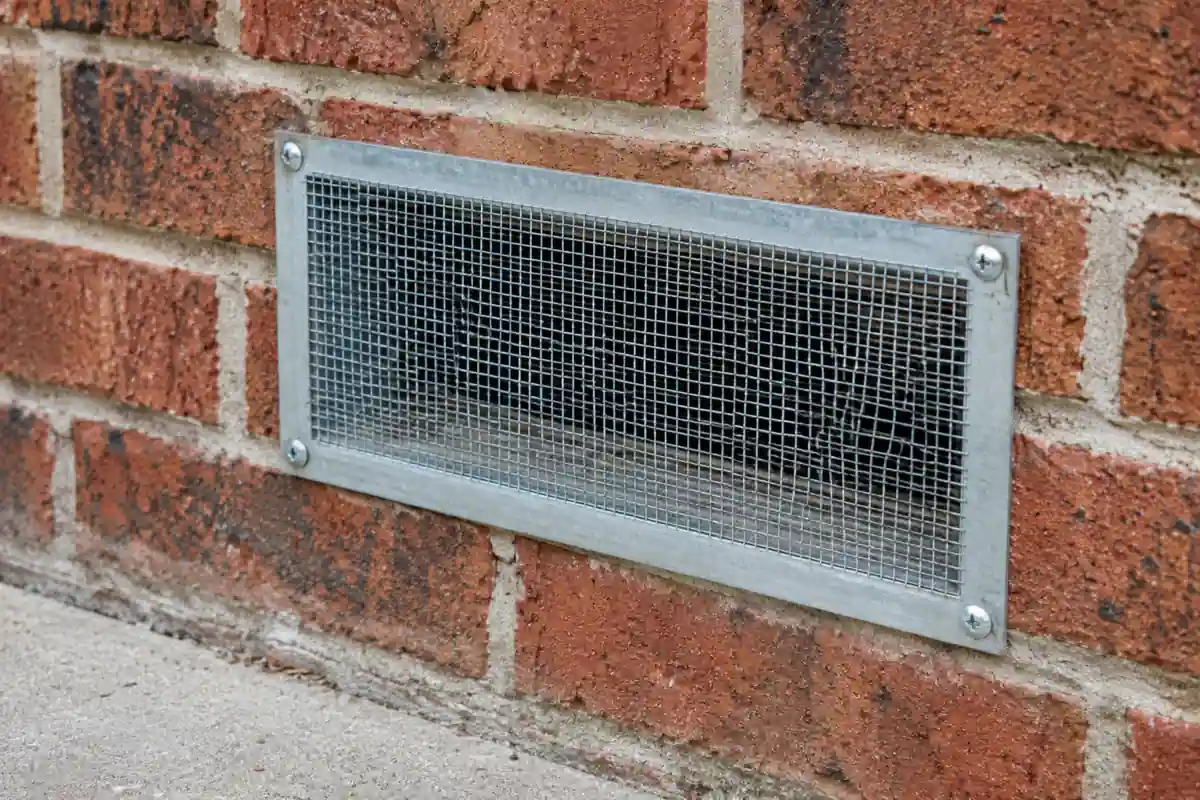
- Foundation vents with rusted or missing screens, especially on brick ranches from the 1950s and 1960s.
- Original wooden garage doors whose bottom edges have worn or rotted.
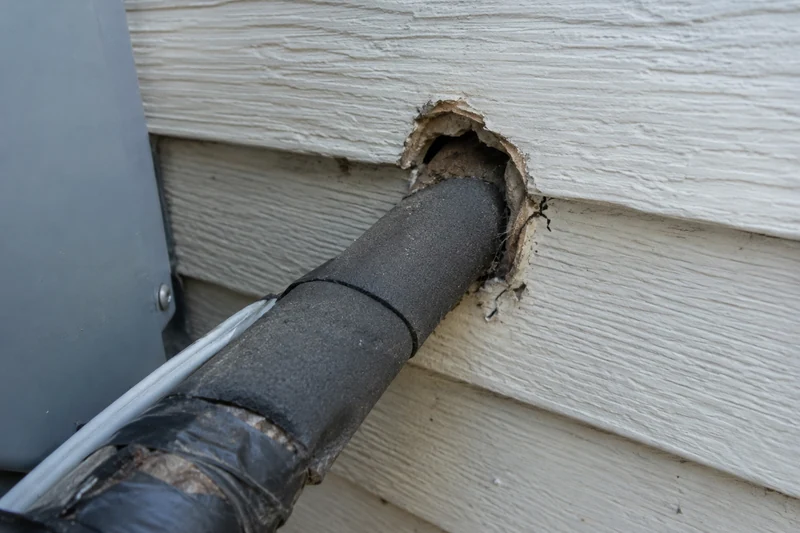
- Gaps where newer plumbing, cable and AC lines were added through old walls without being sealed.
- Soffit and fascia boards that have pulled away from the roof edge.
- Crawl space access doors that no longer close tightly.
Newer houses are not immune. Builders leave openings around utility entries and garage door corners, and homes backing onto woods face more rodents trying.
A Roof-to-Foundation Check
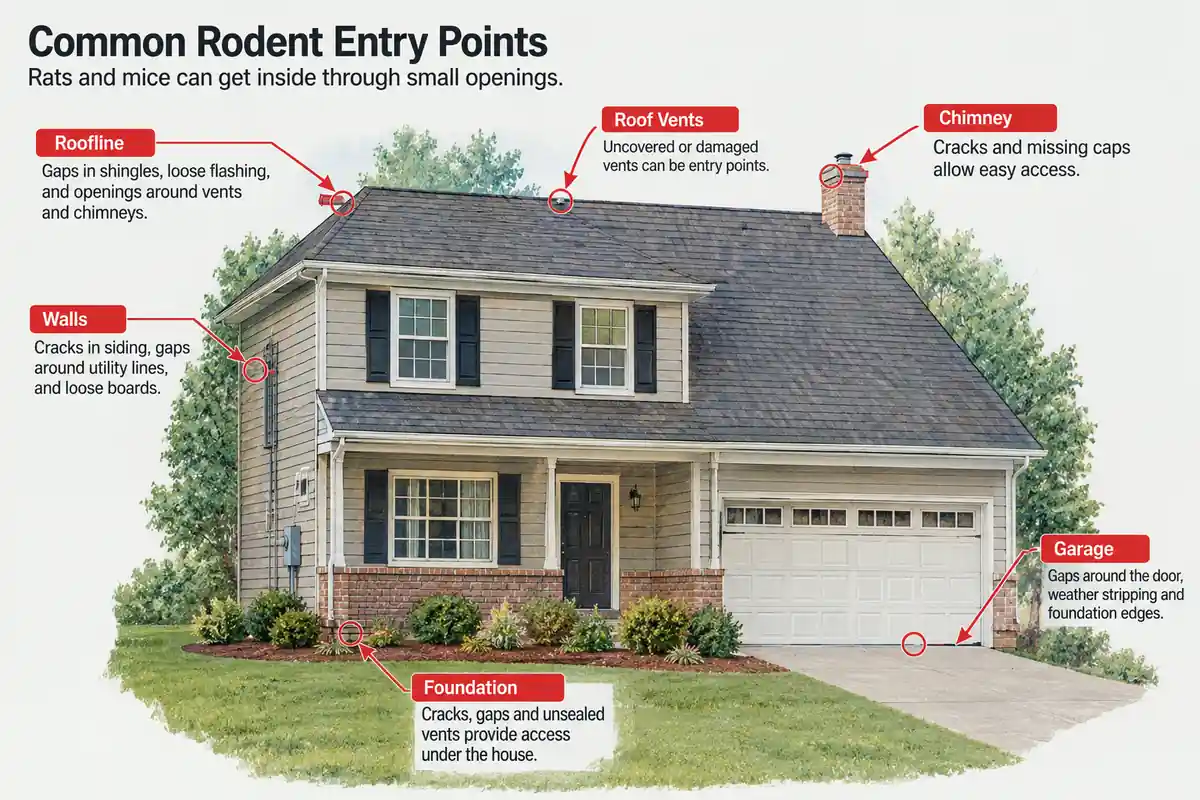
Walk around your house with a flashlight and look at each zone in turn. This table shows what to check and what a gap usually looks like.
| Zone | What to check | What a problem looks like |
|---|---|---|
| Roofline | Soffits, fascia, gable vents, roof returns, chimney flashing | Gaps where boards meet, bent or chewed vent screens, dark rub marks on wood |
| Trees and wires | Branches, vines and utility lines touching the house | Limbs resting on shingles or gutters, worn bark where animals cross |
| Walls | Pipe, AC-line and cable entries, dryer vent, weep holes in brick | Holes larger than a pencil around penetrations, missing vent flaps |
| Foundation | Crawl space vents and access door, cracks in brick or block | Missing screens, gaps around the door frame, burrows at the base |
| Garage | Door bottom seal, corners of the door frame, side doors | Daylight at the corners, chewed or flattened weatherstripping |
| Doors | Thresholds and door sweeps on exterior doors | Light visible under the door, gnaw marks on the bottom edge |
How High Rats and Mice Can Reach
NC State Extension notes that a rat can jump about 36 inches straight up and a mouse about 12. Both climb rough brick, siding and downspouts easily, and roof rats walk utility lines like a tightrope. So a vent two feet off the ground is within easy reach, and stacking stored items against a garage wall builds a ladder.
Size matters as much as height. A young mouse can pass through a gap about the width of a pencil, and a young rat through one about the size of a quarter. If the tip of your finger fits, assume a rodent can too.
Materials That Hold, and Ones That Don’t
Rodents chew through soft materials quickly, so the choice of material decides whether a repair lasts.
| Material | Holds up? | Where it fits |
|---|---|---|
| Hardware cloth (galvanized, 1/4 inch mesh) | Yes | Foundation and gable vents, soffit gaps, crawl space openings |
| Sheet-metal flashing | Yes | Gaps along rooflines, the bottom of wooden doors |
| Concrete or mortar | Yes | Holes in brick and block foundations |
| Door sweeps and garage door seals with metal or brush strips | Yes | Exterior doors and garage doors |
| Expanding foam on its own | No | Rodents chew straight through it; use it only behind metal |
| Steel wool on its own | Short term | It rusts and pulls out; pack it, then cover it with sealant or mesh |
Ventilation still matters. Vents need mesh, not a solid cover, so attics and crawl spaces can still breathe.
Garages, Sheds and Doors
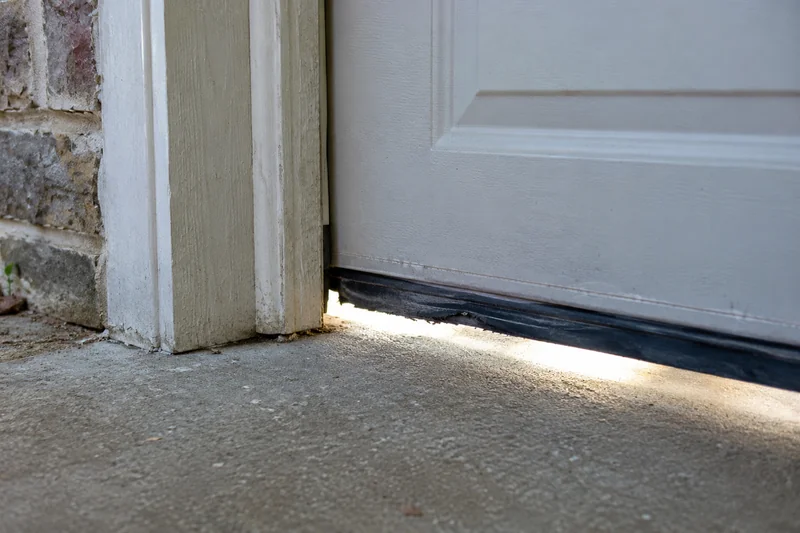
Garages are the most common way mice get into Greensboro houses. The bottom seal on a roll-up door wears out, the corners never quite meet the frame, and the door from the garage into the house often has no sweep at all. Replacing that seal and adding a sweep to the interior door closes two layers at once.
Sheds and detached garages are their own problem. A gap under the floor or a door that doesn’t close gives rodents a base right next to the house. Keep stored bird seed, grass seed and pet food in metal or heavy plastic bins with tight lids.
Sealing Comes After Removal
Never seal a house while rodents are still living inside it. Trapped animals chew new holes to get out, or die in the walls and leave a smell. A good provider traps first, watches until activity stops, then seals, sometimes in stages. Sealing belongs alongside rat removal or mouse control depending on which animal you have.
Two areas get their own detailed pages because they are so common here: crawl space vents and doors and roofline gaps.
Rodent Exclusion Greensboro Questions
Does rodent exclusion really work?
Yes, when every opening is sealed with chew-proof material and the house is checked afterward. It does not remove rodents that are already inside, which is why it follows trapping rather than replacing it.
What keeps rats away permanently?
Sealed openings, not smells or gadgets. Add good habits around the yard, such as closed trash cans and no pet food left outside, and the house stops being worth the effort.
Does steel wool keep mice out?
For a while. Mice can pull it loose, and it rusts in a damp crawl space. Use it as packing behind sealant or hardware cloth, not as the whole repair.
Do plug-in repellers or peppermint oil work instead?
They don’t replace sealing. Ultrasonic plug-ins have shown little lasting effect in university testing, and the Federal Trade Commission has warned sellers about unsupported claims. Scents such as peppermint oil fade within days, and a hungry mouse will walk past them.
Sources: Census Reporter, Greensboro housing data; NC State Extension on house mice and other rodents.